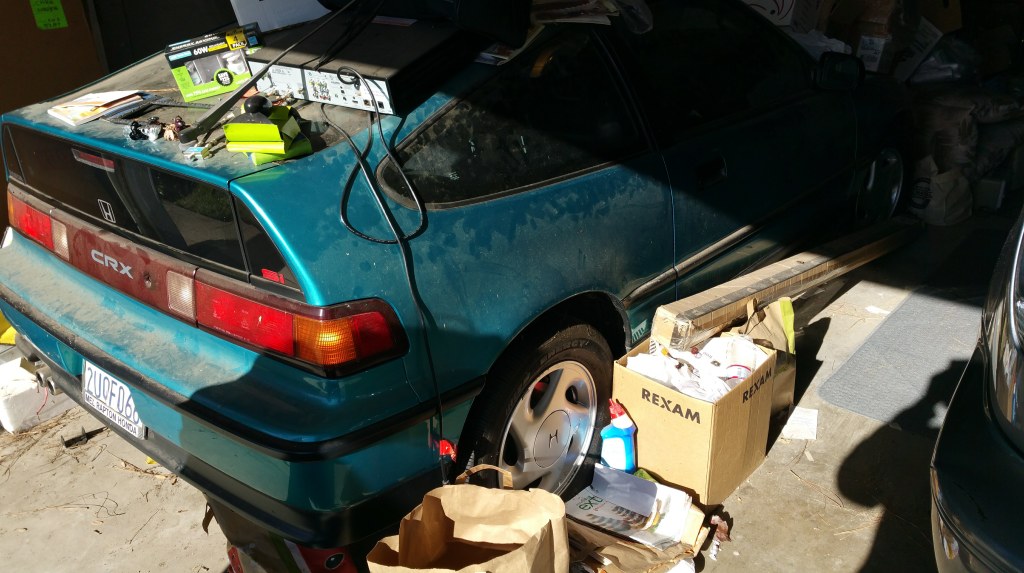
Every gearhead passes time with a trip to the marketplaces of the internet. Currently, my favorites are Hemmings and Bring A Trailer. Both cover the broad middle ground of the market, with the occasional Interesting Piece materializing from some garage, shed, barn or storage area. My job also offers access to garages, with some lovely thing spotted every now and again, like the Honda CR-X that was free for my taking, if I could get a tow. The Mercedes I’d found and purchased from Craigslist was in the garage, not working with bad ignition coils and dragging another project home would probably result in at least a stern talking-to…At least.
The Mercedes will probably be my last older European car. It’s getting so that keeping a semi exotic (By virtue of age) vehicle registered in California is becoming an expensive proposition- the Mercedes ate up 3000 dollars getting new catalysts and coked-up EGR passages cleaned out to pass smog, which it did, barely. Not looking forward to next cycle.

But that doesn’t mean that I’ll stop looking at old crocks. My favorite activity isn’t looking at the latest hypercar up for auction when I visit these sites. No, it’s examining the rusty relics from my past and remembering what an utter pain in the ass they were to own. Like that handsome W124 mercedes above. Well, it was a pain. I’ve since taken care of most of the “Deferred Maintenance”(see 3000.00 bill above), and the Mercedes is now as strong as a 28 year old car can be, if you …nevermind.
Craigslist, after decades of free ads for cars for sale, began charging a five dollar fee for vehicle ad placement. This resulted in a paucity of the odd stuff that I so enjoyed looking at, at least when I checked immediately after the imposition of the fee. No rusted Alfas that the seller was asking 2k for, no tatty Fiats that had a hopeful low four figure price, when they were in reality worth a quarter of that. Nothing.
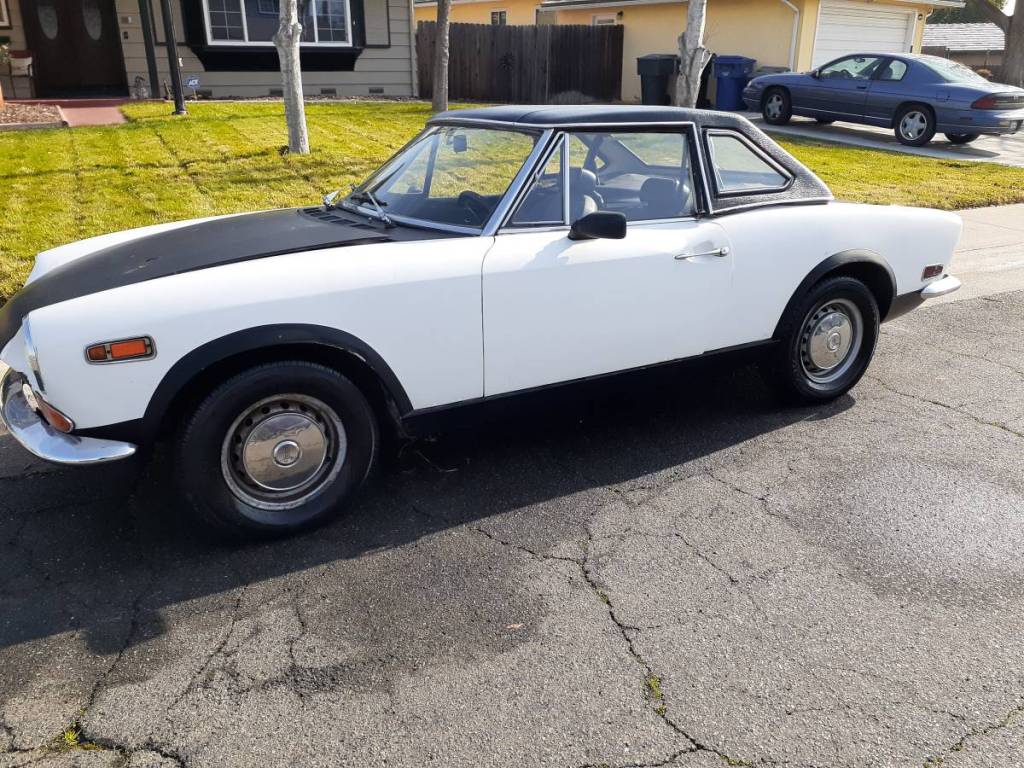

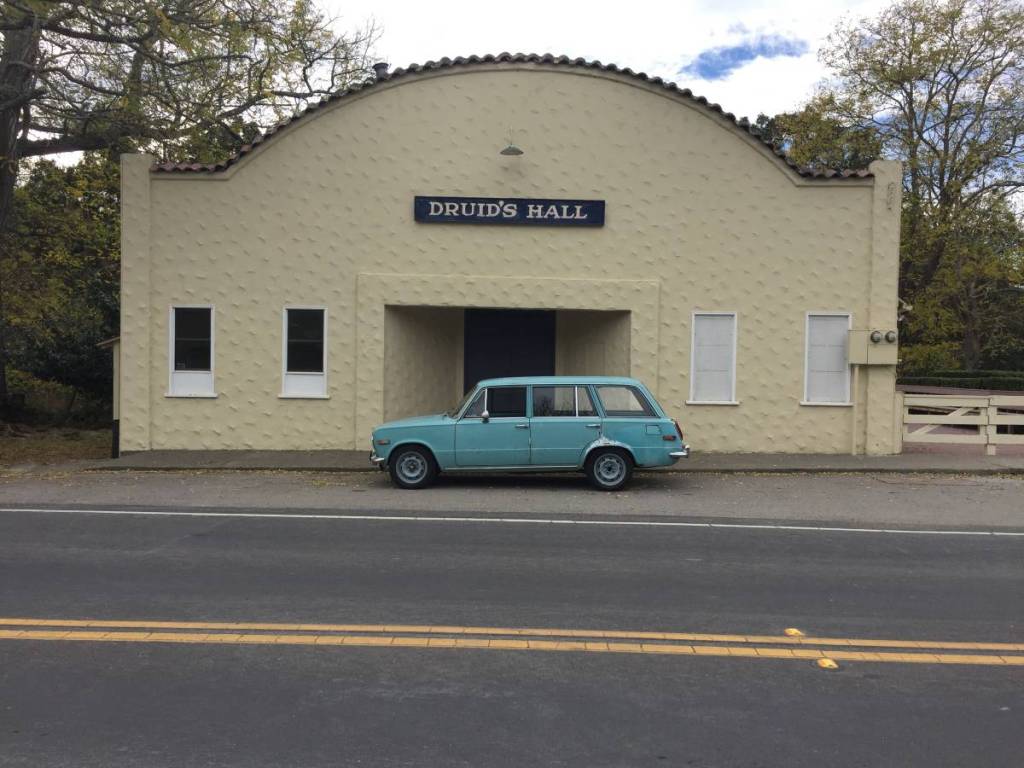
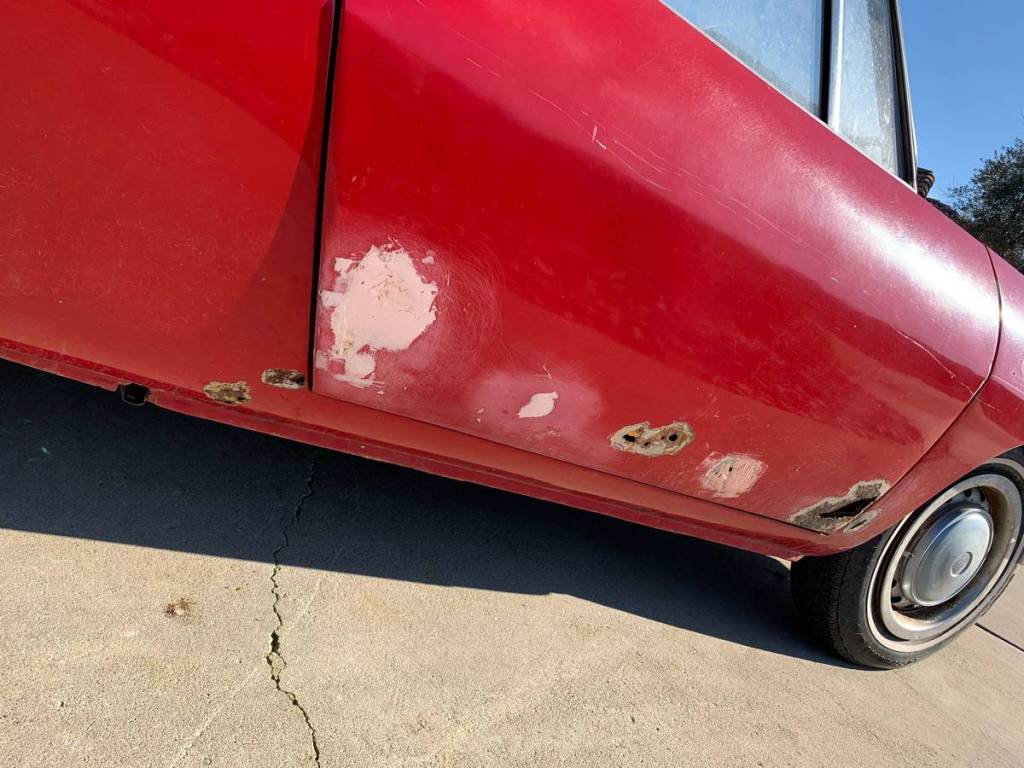



So I looked. Above, you’ll see some of the Italian cars that I loved so much as a younger man, in varying levels of disrepair that range from neglect, to entropic forces so strong that no amount of restoration will cure it. We’ll start from The Top:

Above is a Fiat 124 Spider. This was the all-purpose sports car for folks who didn’t want the fussiness or the semi-agricultural nature of most British offerings of the day. Fiat kept the basic design forever, so a 1985 Pininfarina Spider was nearly identical to the 1966 debut model. I say “nearly” because the safety regulations here in the ‘States required some detail changes, primarily in the bumpers and the lighting packages. The distinctive, Tom Tjaarda drawn lines remained untouched throughout the run. Along with the shape, there was also the evergreen Lampredi Twin-Cam engine that powered these cars.
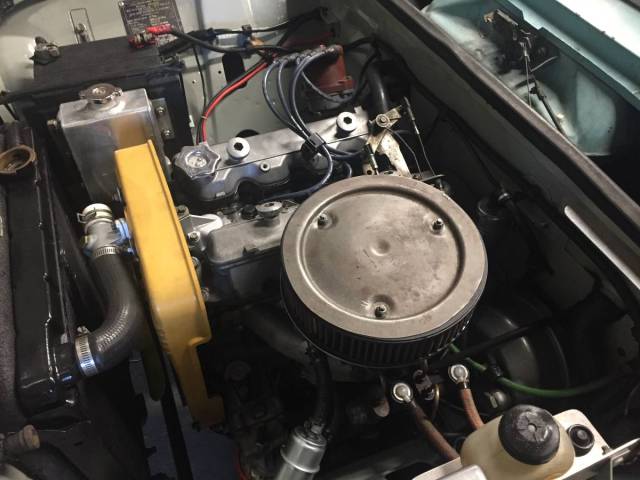
The Fiat Twin-Cam was easily the Italian equivalent of the SBC. Maybe not in numbers, but in tuneability and in races won, it was definitely the Continental analogue to the American stalwart. The seller is asking 5k for the car. What was I saying about hopeful? I’m thinking that it’s gonna sit a while before it finds a forever home.

The patina’d green 124 wagon in front of Druid’s Hall above, was apparently a bit luckier. It was going for something like half of the asking of the Spider and had a cool, Bay Area vibe to it. I’m sorry I didn’t poach more pictures.
A few decades back in the glow of the 80’s, I worked in a full-service station. One of my coworkers, Chris, had an 850 spider like the one above, only dingier and tattier. Fiats of the era didn’t last very long because of the indifferent attitude regarding rustproofing, others say it’s because of the Soviet sourced steel being used for the stampings. Here’s a witty and informative take on why Fiats rust.
The Fiat 850 is the evolution of the Fiat 600, a rear-engined city car, which was the replacement for the Topolino, which is where we’ll stop for brevity’s sake. You could get the 850 in many configurations, the spider being the most popular form of the car here in the U.S. and the version with the most survivors, due mostly to the popularity of the runabouts.
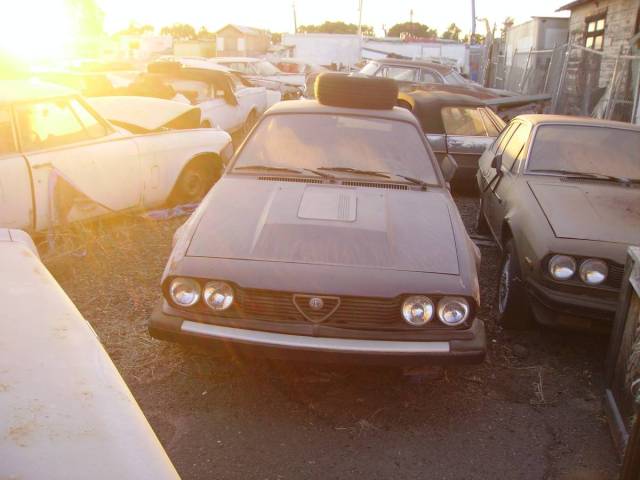
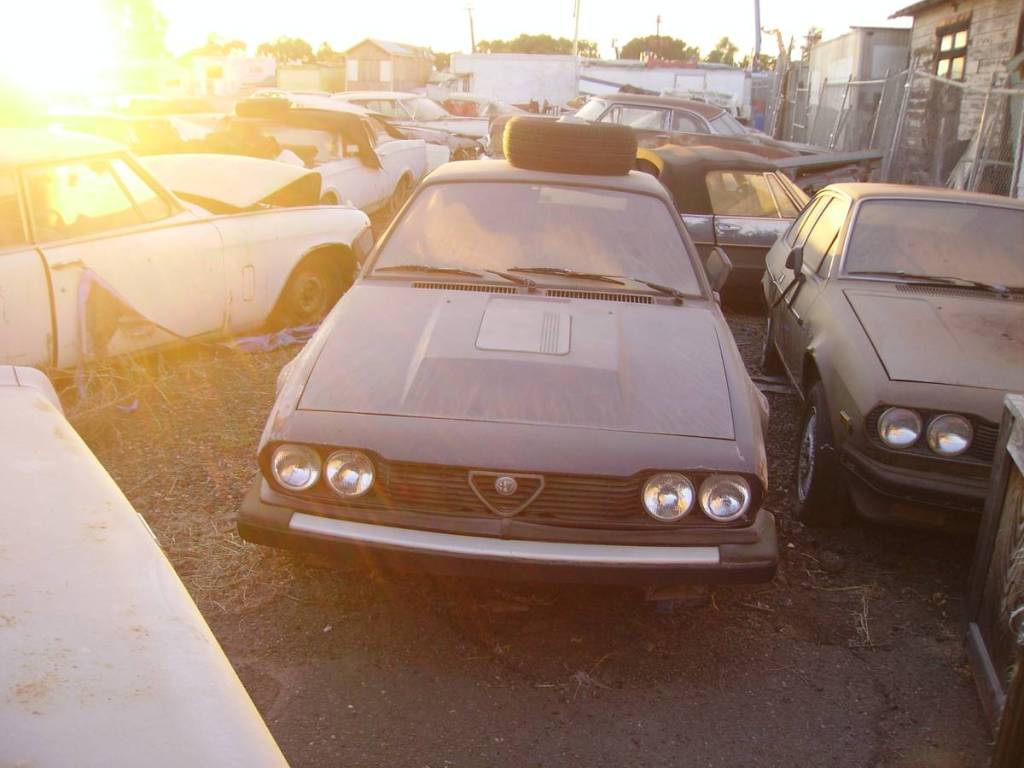
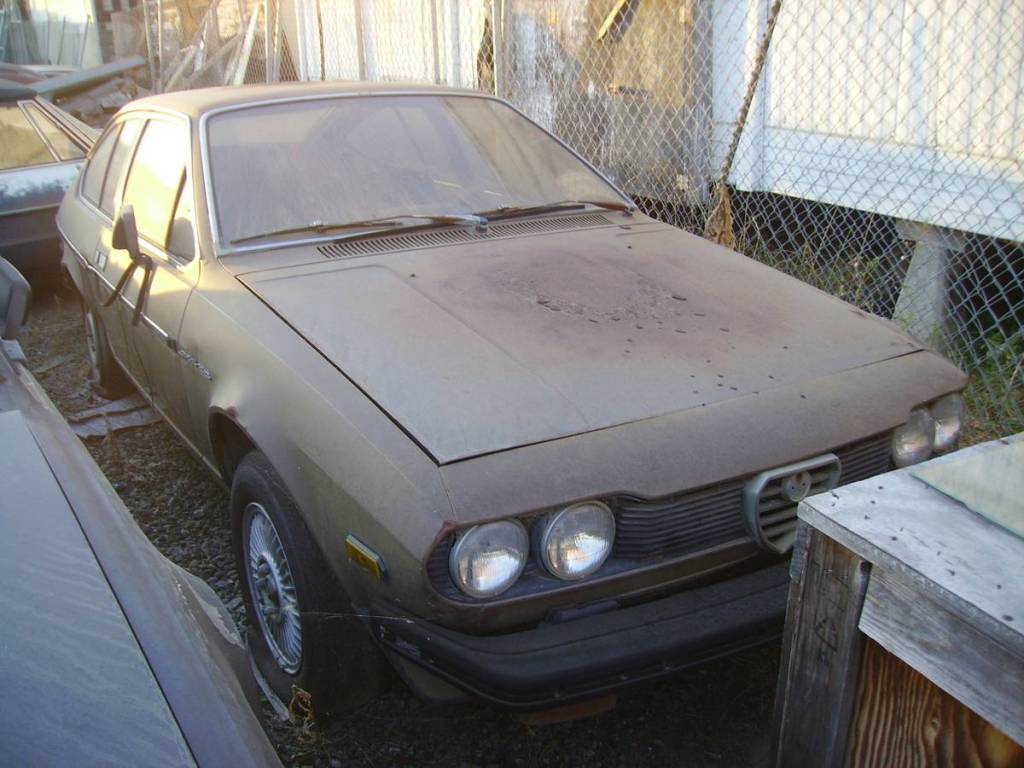
More than Fiats, I drove Alfa Romeos. A buddy of mine had a 105/115 GTV, and a Berlina of the same vintage, while I had an Alfetta Sedan. The above are Alfetta Coupes, one with the eternal twincam engine, the other with the “Busso” V-6. The V-6 has pride of place, while the four-cylinder is mostly out of frame. Alfa Romeo, even more than Fiat, has a storied racing history and made some legendary cars. The Alfettas pictured above were the namesake of the Tipo 158/159 Alfa Romeo Grand Prix car, which like its streetable descendant, featured a transaxle for better weight distribution and handling.
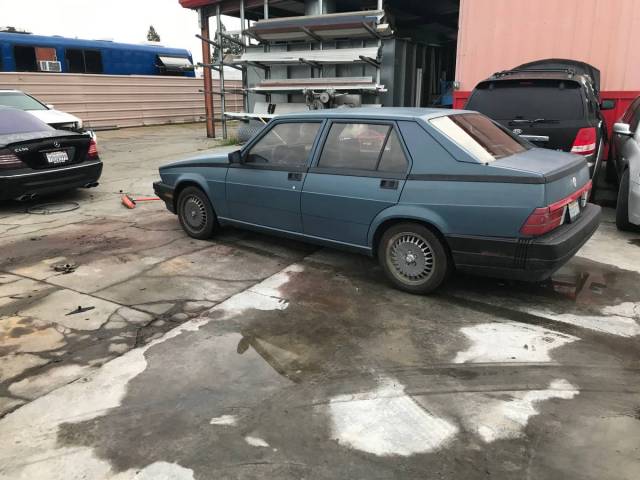
From the Alfetta came the 75/Milano, which here in the ‘States, used only the V-6. Italian cars, especially to a boy who spent way too much time in libraries going through past issues of magazines were attainable objects of desire. However, when these cars were exposed to the U.S. market, they didn’t last long. Literally.
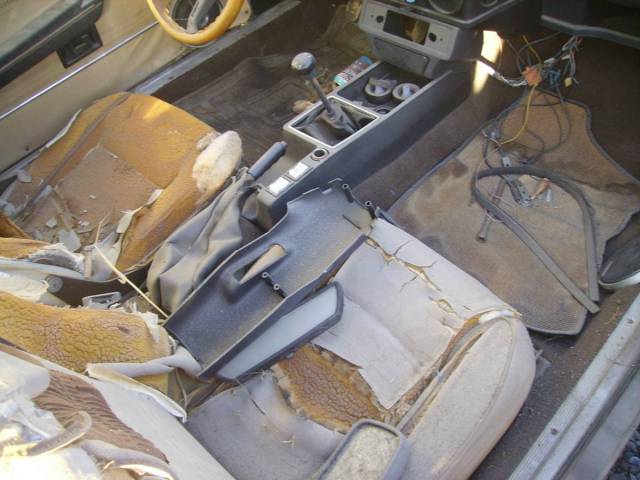
The above shot is what happens to an Alfa Romeo interior after a few decades.
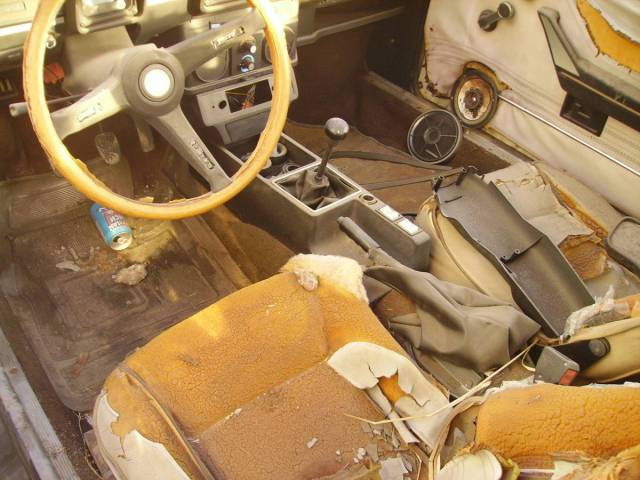
Not so long ago, I was very tempted to purchase a GTV-6, but lack of funds saved me from an even deeper well of despair and ruin. Sometimes, being broke is a good thing.
 The Department Of Past Issues
Leave a comment